The Shadow Ledger: How Rights of Light Reprice a Home Before Anyone Breaks Ground
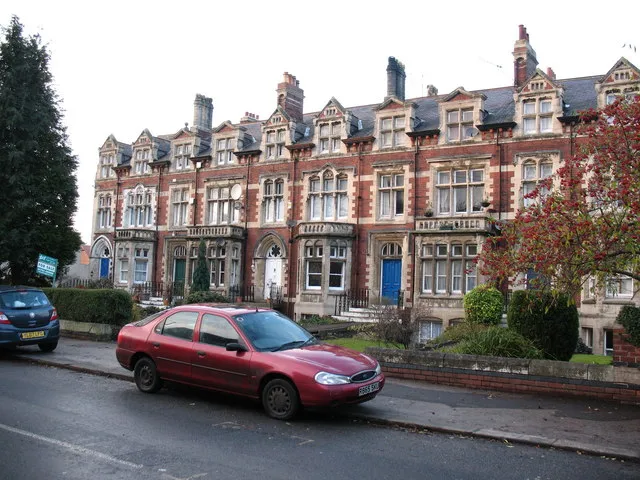
Photo: Gordon Hatton, CC BY-SA 2.0, via Wikimedia Commons
Daylight is rarely listed among the assets that determine a property's value. Buyers count bedrooms, measure gardens and interrogate service charges. Yet in dense UK towns and cities, the light falling through a window can be protected by law. When it is, a neighbouring scheme may be delayed, redesigned or made subject to payment. For a buyer, the risk can lie beyond the title; for a developer, it can sit in plain sight across a boundary.
Light as an easement, not a view
A right of light is an easement. It allows light to pass through a defined opening — typically a window — to the benefit of the land that enjoys it. It does not protect a view, privacy or the character of a street. The legal question is narrower and more technical: has enough daylight been lost to cause substantial interference with the ordinary use of the affected room?
Such rights can arise by express grant, by implication, or by long enjoyment. The Prescription Act 1832 and the doctrine of lost modern grant are central to the last route. In practical terms, a window that has enjoyed uninterrupted light for the requisite period may have acquired protection, even if no deed records it. Once established, the right usually benefits the property through changes of ownership and can bind successors to the servient land.
Not every window qualifies. The aperture must be capable of receiving light, the enjoyment must be as of right, and the evidence must support continuity. Old photographs, historic plans, deeds and aerial imagery can all matter. So can the physical layout: a window that has been blocked for years, or altered in a way that breaks the qualifying period, may tell a different story from one that has remained in constant use.
Why a neighbouring scheme triggers risk
Rights of light become commercially significant when a site is developed. A rear extension, a roof addition, an infill building or a taller block can reduce the light reaching neighbouring windows. The affected owner may seek an injunction to restrain the interference, or damages in lieu. The court's approach to damages has evolved, particularly since Coventry v Lawrence in 2014, but the starting point remains the seriousness of the interference and the adequacy of compensation. A developer should not assume that a payment will always be accepted in place of an injunction.
This is why a planning consent is not a clean bill of health. Planning authorities consider daylight and sunlight under planning policy and guidance, often using BRE-based assessments. Rights of light are a separate private-law question. A scheme may satisfy the local planning authority and still provoke a claim from a neighbour whose window has prescription protection. A Party Wall award, similarly, deals with party wall matters; it does not extinguish or authorise interference with a right of light.
For homeowners, the risk can arrive from next door. A large extension that leaves a principal room noticeably darker may give rise to a claim, particularly where the window has a long, documented history. For buyers, the more common issue is latent: the property they are purchasing may benefit from rights over a neighbouring site, or may be burdened by rights that restrict future works. Either way, the value of the legal asset — or the cost of the liability — should be understood before exchange.
The buyer's pre-exchange audit
A rights of light review should begin with the title and the seller's knowledge. Ask directly whether there have been disputes, complaints or negotiations about light, and whether any light obstruction notice has been registered. Check the title for easements, reservations and notices. A local land charges search and the standard conveyancing enquiries are useful, but they are not a substitute for a specialist rights of light assessment where the property or its setting makes the issue material.
Look at the windows themselves. Which openings face a neighbouring development site? Are they original or longstanding? Is there evidence of uninterrupted enjoyment? For a flat, the relevant windows may serve only one room, but that room may be the difference between a comfortable home and a compromised one. For a house with development potential, the key question may be the reverse: what light does the property enjoy over land that could one day be built on?
Where a buyer intends to extend, convert or infill, the audit should precede exchange. A desktop rights of light appraisal can identify affected windows and likely constraints. A site survey may be needed to measure apertures, internal reflectance and the geometry of the proposed scheme. If the risk is real, the buyer can renegotiate, seek a release from the benefiting owner, or walk away. Indemnity insurance may assist in some circumstances, but policies often exclude known issues and should never be treated as a substitute for advice.
The developer's sequence
For developers, rights of light should be considered at acquisition and before planning, not after the scaffold goes up. The first step is to identify every window that could be affected, including those in neighbouring flats, rear extensions and commercial premises. The second is to test the likely injury against the proposed massing. The third is to negotiate early. A release, a deed of easement, a variation or a financial settlement may be cheaper than a redesign forced by a late objection.
A light obstruction notice can be relevant in some acquisition strategies, but it is a technical step with strict requirements and should be handled by a specialist. It is not a general licence to build. Nor should a developer assume that a neighbouring owner will fail to notice a scheme. In active markets, objections often emerge when planning notices go up or when the impact becomes visible from a kitchen window.
Negotiation can take several forms: lowering eaves, setting the building back, changing roof form, accepting conditions or making a payment. The right outcome depends on the evidence and the affected owner's position. What matters is that the conversation happens before contracts are exchanged or construction begins, when options remain open.
Red flags in 2026
Period terraces with longstanding rear windows facing potential infill sites deserve particular attention. So do corner plots, backland sites and streets where small-scale development is intensifying. A seller's assurance that a window has always been there is not proof of a legal right; equally, a planning permission is not proof that no private right exists. The absence of a search result is not the same as the absence of risk.
In a market that rewards careful due diligence, daylight should be treated as collateral. It can add value to a home, constrain a development site or become the subject of a costly dispute. The prudent approach is forensic but proportionate: establish what rights exist, test them against the proposal, and price the risk before it becomes a shadow over the transaction.