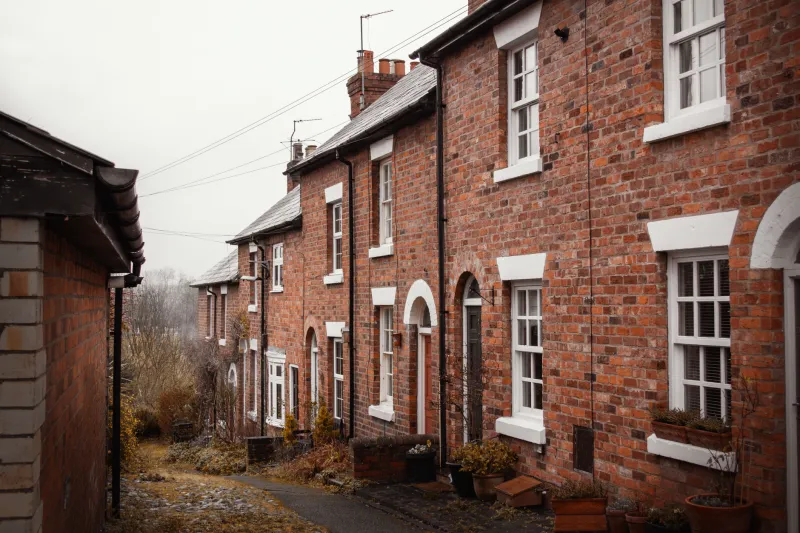
Where the Tarmac Ends: A Buyer's Checklist for Private Roads in 2026
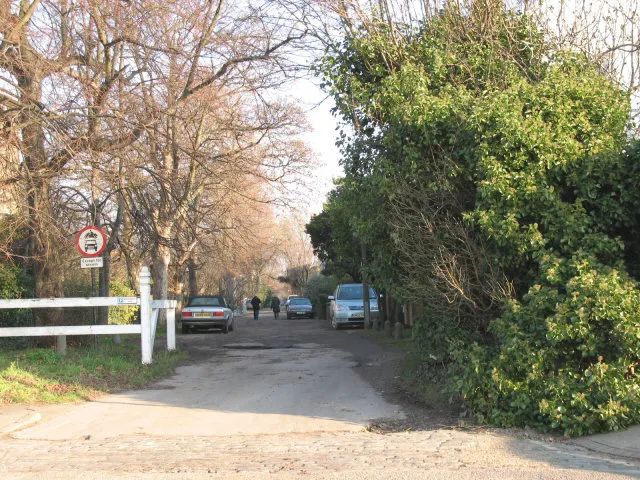
Photo: Stephen Craven, CC BY-SA 2.0, via Wikimedia Commons
A private road is one of the more deceptive features in the UK housing market. It often looks calmer, greener and less trafficked than an adopted street, and buyers reasonably read that as value. The difficulty is that the surface may not be maintained by the local authority at all. Responsibility can sit with the owners of the houses along it, sometimes through a formal company, sometimes through a deed of covenant, and sometimes through nothing more robust than an informal arrangement that has worked for twenty years. Before exchange, the question is not whether the lane looks tidy today. It is who pays when the tarmac fails, the gullies block or the street lighting stops working.
Start With Adopted Status, Not Appearance
The first enquiry is simple: is the road maintainable at public expense? In England and Wales, the local land charges search and the CON29 enquiries should address adopted status and maintenance responsibility. In Scotland the regime differs, so the solicitor should confirm the position under the relevant system rather than assume an English answer applies. A council may repair a road occasionally without adopting it, and residents may maintain a road that the council has never adopted. Appearance proves very little.
Ask for the answer in writing. If the road is not adopted, ask whether any part of it is subject to a future adoption agreement, such as a Section 38 agreement, and whether that agreement has been completed or merely contemplated. A road that is due to be adopted is a different proposition from one that has been private for a century. The difference should be reflected in the price and in the lender's assessment.
The Title Tells You Who Carries the Burden
Read the title plan and the transfer documents for the property and for the road itself. The road may be included in the title, may be owned by a third party, or may be owned in strips by the adjoining owners. The property title may contain covenants to contribute towards maintenance, or may reserve rights of way over a road that someone else owns. Those are not administrative details. They define what the buyer can use and what the buyer must pay.
Ask the seller for any road maintenance agreement, residents' association rules, accounts, budgets and recent invoices. If a company owns or manages the road, obtain its articles, the latest accounts and the current service charge or contribution schedule. If there is no company, ask how decisions are made and what happens when a household refuses to pay. Informal arrangements can work, but they are fragile when a large repair is needed.
Local Land Charges and Estate Rentcharges
The local land charges search is not a formality on a private road. It can reveal whether the road is adopted, whether there are outstanding charges, and whether the property is affected by a maintenance obligation. The CON29 enquiries can also elicit whether the road has been adopted or is subject to an agreement.
Estate rentcharges deserve particular attention. A freehold house can be subject to a rentcharge used to fund maintenance of communal areas, including a private road. Ask whether the rentcharge is fixed or variable, what it covers, how it is apportioned, whether it is registered, and whether there are arrears. A modest annual rentcharge may be good value if it funds a properly managed road. An uncapped or poorly defined rentcharge is a different matter. Lenders and their solicitors will want the mechanism explained clearly, and a buyer should not accept a vague assurance that it has never been a problem.
What to Ask the Seller and the Solicitor
The seller should be asked for a history, not just a yes or no. Has the road been resurfaced in the last ten years? Who paid? Is there a sinking fund? Are there any disputes about contributions? Who owns the street lighting, and who pays the electricity? Are there drainage issues, and has anyone investigated them? Have any residents refused to contribute, and how was that resolved?
The solicitor should explain the covenants, the rentcharge, any residents' company obligations and any rights of access. Ask specifically whether the property benefits from a right of way over the road and whether that right is recorded. A right of way is not the same as a duty to repair. A buyer can have a perfectly good right to drive over a road while carrying a substantial obligation to pay for its upkeep. The documents should show which is which.
Maintenance Shares and Mortgageability
A maintenance share affects more than the annual budget. It affects how easily the property can be sold. A lender will want to know whether the road is adopted, whether there is a formal maintenance arrangement, and whether the borrower could be exposed to an unlimited or unpredictable liability. Some lenders are comfortable with a well-run residents' company and a clear contribution schedule. Others will decline a property where the road is maintained informally or where the obligation is unclear. The difference can be decisive in a slower market.
Resale follows the same logic. The next buyer's solicitor will ask the same questions, and the next lender will apply the same tests. A private road with clean paperwork, accounts and a sensible reserve is more saleable than an identical road with no records. If the seller cannot produce documents, the buyer should assume the worst and price accordingly rather than rely on assurances.
Insurance Questions in 2026
Home insurance does not automatically cover the road outside the gate. Ask the broker whether the policy extends to public liability arising from the road, whether a residents' company needs separate cover, and whether directors and officers cover is in place if a company manages the road. If the road is used by delivery vehicles, visitors or the public, liability questions become more important. Legal expenses cover may also be relevant if contributions are disputed.
These are not reasons to avoid every private road. They are reasons to ask before exchange rather than after a claim. A short conversation with an insurer or broker at the enquiry stage is cheaper than discovering the gap when a drain collapses.
A Quiet Lane or a Hidden Annual Bill?
The appeal of a private road is often its atmosphere. The risk is that the atmosphere disguises a liability. A short shared lane with a formal company, a modest reserve and recent invoices is a known quantity. A long unadopted road with drainage, street lighting and no maintenance history is a different proposition. In 2026, repair costs have not stood still, and buyers should obtain current contractor quotes or recent paid invoices rather than rely on figures from several years ago.
A practical order of enquiry is to confirm adopted status, read the title and rentcharge, obtain the maintenance documents, ask the lender and insurer early, and then price the liability. If the road is private, the buyer should know who owns it, who pays for it and what happens when it needs work. That is the difference between buying a quiet lane and buying a quiet lane with an unread bill attached.
At Merchants Properties, the view is straightforward: local knowledge should include the road as well as the house. A private road can be a perfectly sound purchase, but only when the obligation is understood before exchange rather than discovered afterwards.