Reading the Rain: How Drainage Records Should Shape a UK Offer
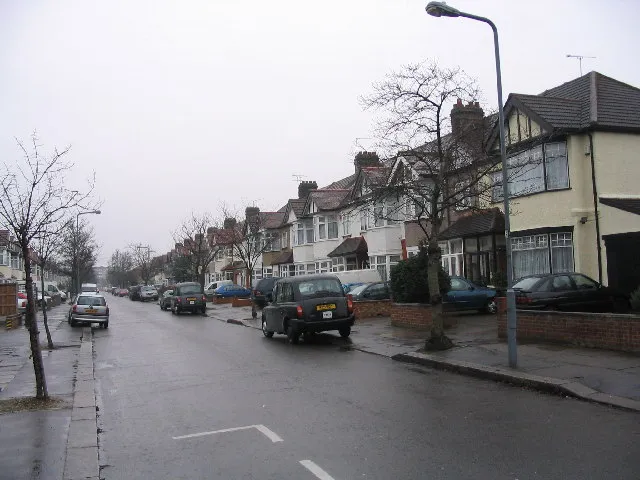
Photo: Andrew Dann, CC BY-SA 2.0, via Wikimedia Commons
A property can stand on high ground, sit outside any mapped flood zone and still have a water story. Surface-water flooding is rarely a matter of a river bursting its banks. More often it is the product of a street's particular gradient, the capacity of its gullies, the condition of a culvert, the paving over of front gardens and the way a local authority has managed drainage over decades. For a buyer, the risk is not simply whether the house has been flooded. It is whether the street's drainage history has been understood, priced and, where necessary, designed into the terms of the offer.
Begin with the lie of the land, not the postcode
Flood maps are a starting point, not a conclusion. The Environment Agency's mapping remains the first reference in 2026, but surface-water risk is often modelled at a finer grain and can be missed by a broad postcode search. A buyer should look at the street itself: where does the road fall? Which side sits lower? Are there kerb inlets, gratings or a raised pavement that suggests a known flow path? Does a rear garden slope towards the house, or away from it?
Ordnance Survey maps and local topographical surveys can reveal culverted watercourses, old ponds and field drains that no longer appear on the surface. A culvert running beneath a terrace or a driveway is not automatically a problem, but its condition and ownership are questions worth asking. The same applies to land that drains onto the property from higher ground. A house can be dry in a moderate storm and still receive water from a neighbour's driveway or an adopted highway that sheds surface water in a way the original drainage design did not anticipate.
The searches that ask better questions
The standard conveyancing search pack will usually include an environmental search, but buyers should not treat it as a drainage audit. A more useful step is to approach the local authority's drainage and flood records directly. The Lead Local Flood Authority — usually the county or unitary council — holds records of ordinary watercourses, historic flood incidents and, in many areas, Section 19 flood investigation reports produced since the Flood and Water Management Act 2010. These reports can be dry reading, but they often identify the exact streets, junctions and drainage assets that have failed in past events.
Ask the council whether the road drainage is adopted and maintained by the highway authority, or whether it is private. Ask whether there are known capacity issues, maintenance schedules or outstanding works. If the property is near a watercourse, establish whether it is main river, ordinary watercourse or culverted. For sewers, a drainage search from the water company should show adopted assets, but it may not reveal private drainage serving a small row of houses. In those cases, a CCTV drainage survey and a topographical survey are more informative than reassurance.
Planning files often contain the water story
Local planning records are an underused source of drainage evidence. A recent extension, a change of use or a small development nearby may have required a drainage strategy, a flood risk assessment or a condition discharge. The consultee comments from the Lead Local Flood Authority and the Environment Agency can be especially revealing: they may note a history of surface-water flooding, insufficient attenuation or a requirement for maintenance of sustainable drainage systems.
Buyers should also look at refused applications. A scheme that was turned down partly because of drainage or flood risk can indicate a constraint that affects the wider plot, not just the applicant's plans. Conditions attached to permissions may require drainage works that have never been implemented. A planning file will not tell you everything, but it can tell you what the council and its advisers already know about water on that street.
Use insurance as a pricing instrument, not a formality
Buildings insurance is often treated as a closing formality. For a property with any drainage question, it should be part of the due diligence. Obtain quotes before exchange, not after. Declare what you know — the proximity of a watercourse, any historic flooding, a basement or a lower-ground floor — and compare the excesses, exclusions and conditions. A loaded premium is not proof of a defective property, but it is evidence of how the market prices the risk. That evidence can support a negotiation.
If a quote arrives with a significant flood excess or an exclusion for surface water, ask the insurer what information would improve the terms. Sometimes a survey, a resilience measure or a maintenance record is enough to make the policy more competitive. Sometimes it is not. Either way, the buyer is better informed than one who relies on a vague assurance that the street has never had a problem.
Read the street for signs, but verify them
Physical signs are useful prompts, not conclusions. Look for water staining on boundary walls, silt lines in gullies, air bricks set unusually high, non-return valves on drainage runs, sump pumps or recently repointed brickwork at low level. Detention basins, swales and permeable paving may indicate that the area has been designed to manage surface water — but they may also indicate that it needs to. Ask who maintains them and whether the arrangement is documented.
Neighbours can provide valuable local knowledge, particularly about repeated events that never reached a formal record. Treat anecdote as a lead to investigate, not as a substitute for a search. The same applies to a seller's disclosure. A clear answer is helpful; an evasive one is a reason to ask for more.
Turn the file into terms
A drainage dossier should change the offer only to the extent the evidence justifies. If a search reveals a known capacity issue, a private drainage asset with no maintenance regime or a history of surface-water ingress, the buyer can seek a price adjustment that reflects the cost of investigation and mitigation. Alternatively, the terms can include a condition requiring drainage works before completion, a retention held against a CCTV survey, or a requirement that the seller obtains and supplies maintenance records for a sustainable drainage system.
Where the risk is complex, a specialist flood risk consultant or drainage engineer may be proportionate. Their report can price resilience measures — non-return valves, raised thresholds, external paving falls, a sump and pump — and give both parties a common basis for negotiation. The aim is not to manufacture a discount. It is to ensure that a vague concern about water becomes a specific, evidenced term.
At Merchants Properties, the guiding principle is local expertise and lasting value. A street's drainage history is part of what a buyer is purchasing, even when it never appears in the title pack. Read the rain before you offer, and let the evidence — not anxiety — set the terms.