Between Departures: Auditing Rail and Flight Noise Before You Offer
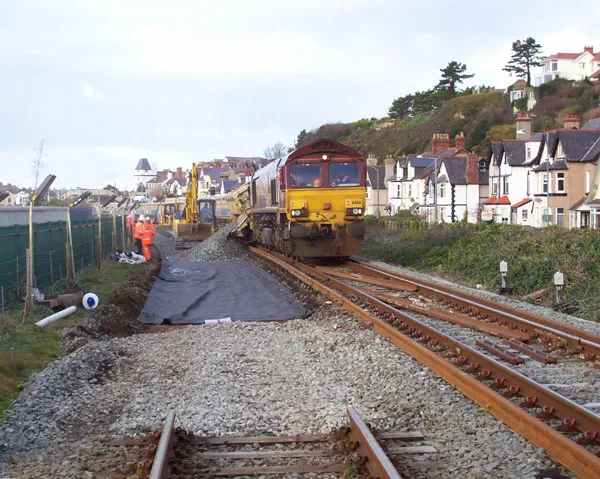
Photo: Jonathan Wilkins, CC BY-SA 2.0, via Wikimedia Commons
The problem with asking, “Is it noisy?”
Most buyers ask the wrong question. They stand in a garden, hear a train pass, and decide either that it is fine or that it is unbearable. Neither conclusion is much use at the negotiating table. Noise is not a binary defect; it is a pattern of frequency, duration, timing and mitigation. The practical task is to build a small evidence base before you offer, so that any adjustment to price is grounded in what the property actually exposes you to rather than in a single visit on a quiet Tuesday morning.
For a 2026 purchase, that means treating noise as a valuation input alongside condition, tenure and location. It does not automatically justify a discount. It does, however, deserve a method.
Start with the published maps, but do not stop there
Strategic noise maps produced for major roads, railways and urban areas are a sensible first filter. They can show whether a property sits inside a broader corridor of elevated exposure, and airport contour maps will indicate whether a home falls within a flight-path envelope. These maps are useful for context, but they are not property-specific. A map may generalise across a terrace; it cannot tell you whether the rear bedroom catches a freight train at 23:40 or whether the garden is shielded by a mature hedge and a neighbouring wall.
Use the maps to decide where to look more closely, not to reach a final view. The same applies to online noise-score tools. They are a starting point for enquiry, not a substitute for a site visit.
Time your visits to the working week
A single viewing is rarely enough. Where noise is a material consideration, arrange at least two visits at different times. The most revealing windows are typically 07:30 to 09:00 on a weekday, 17:00 to 19:00 on a weekday, and a weekend afternoon. If the property has bedrooms facing the source, ask for a late-evening viewing or arrive early enough to stand outside after 22:30.
Listen with the windows open as well as closed. Note not merely whether a sound occurs but how often, for how long and at what intensity. A ten-minute count during the morning peak can be more informative than an hour of vague impressions. Record the number of rail movements, the gap between them, and whether they include freight. For aviation, note whether aircraft pass directly overhead or merely in the distance, and whether the pattern changes with wind direction.
A phone decibel app is indicative rather than calibrated, so treat readings as comparative rather than evidential. The useful question is not “What is the exact number?” but “How does this property compare with the next street, and does the difference justify a price gap?”
Separate the source from the experience
Rail and aviation noise behave differently. Railway noise is often periodic and predictable: a service pattern, a freight path, a departure. Aviation noise can be more variable, affected by runway direction, weather and seasonal schedules. A home may be quiet for much of the day and then exposed during a specific window that happens to coincide with the hours you most value.
The experience also depends on where you spend time. A front bedroom above a railway line is a different proposition from a rear reception room with secondary glazing and a thick party wall. Pay attention to the rooms that matter: bedrooms, the principal living room, and any garden or balcony that forms part of the property’s appeal. A home that is audible outdoors but calm indoors may still support a full asking price. A home where the noise interrupts sleep is a different negotiation.
Price the mitigation, not just the nuisance
Acoustic glazing, secondary glazing, improved ventilation and sealed gaps can materially reduce internal noise, but they are not free and they are not always appropriate. In a conservation area or a listed building, consent and specification may constrain what can be done. A buyer should obtain indicative costs before treating mitigation as a simple fix. If the vendor has already installed acoustic glazing, that is a genuine attribute and should be reflected in the comparable analysis.
Outdoor amenity is harder to mitigate. A garden that is unusable during peak hours because conversation is difficult is not the same as a garden with a distant background hum. That distinction should be recorded plainly in your notes, because it is the kind of point that supports a reasoned negotiation rather than an arbitrary reduction.
Compare like with like on the street
Noise-related adjustments are most persuasive when they are linked to local evidence. Look at sold prices for similar houses on the same street or immediately adjacent roads, adjusting for condition, floor area and outdoor space. Then compare asking prices and time on market. A property that has lingered while comparable stock has moved may be telling you something about buyer perception, even if the vendor has not named noise as the reason.
Be careful not to double-count. If a home is already priced below the street because it needs a new roof, do not apply a further noise discount on the same facts. The ledger should separate condition, location and environmental exposure.
Make the negotiation specific
When you have a record of peak-time exposure, a view on mitigation costs and a set of street comparables, you can negotiate without overstating the case. Present the evidence calmly: the times observed, the rooms affected, the likely cost of acoustic improvements and the comparable evidence. Ask for a price adjustment or a contribution rather than making a general complaint about noise.
A vendor may reject the point. That is useful information too. What matters is that your offer reflects the home you are actually buying, not the quieter home you imagined on the first viewing. In a market where local expertise and lasting value matter, a disciplined noise audit is simply part of reading a property properly.