Minutes from the Door: The Walk-Time Calculation That Should Precede Every UK Offer

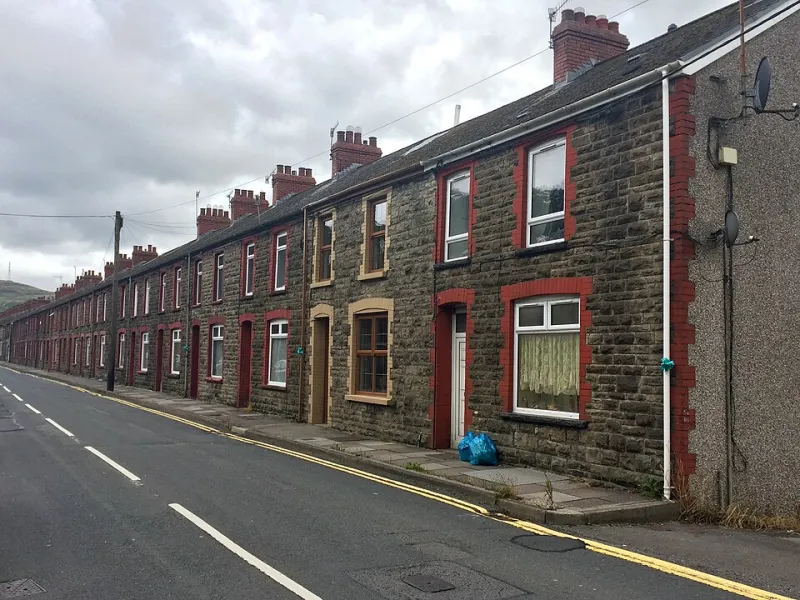
Photo: Roger8971, CC BY-SA 4.0, via Wikimedia Commons
UK buyers are often told that location is everything, yet the phrase is frequently reduced to a postcode and a set of averages. In practice, the experience of a home is shaped by a much smaller geography: the route from the front door to the station entrance, the school gate and the nearest useful high street. In 2026, as asking prices remain sensitive and buyers scrutinise running costs, those minutes are becoming a more honest measure of value than the postcode sector alone.
Why the postcode is too blunt an instrument
A postcode can contain a desirable crescent, a busy arterial road and a cut-through to a retail park. Estate agent particulars and automated valuations often work at that broad level because data demands it. The result is that two homes in the same postcode can carry the same label while offering very different daily routines. Micro-location is the correction: it asks not whether the area is good, but whether the specific walk works.
The thresholds that decide daily life
Three distances deserve particular attention. The first is the station entrance, not the platform or the car park. The second is the school gate, not the edge of a claimed catchment. The third is the high street, preferably the part with a pharmacy, a grocer and a bus stop rather than a single parade of takeaways. A walk of ten to twelve minutes is often the point at which a journey feels routine; beyond fifteen minutes, in poor weather or with a pram, it can become a decision rather than a habit. Buyers should treat those thresholds as practical tests, not marketing language.
Measure the walk, not the map line
Digital maps are useful starting points, but they can flatter a route. They may send a pedestrian through a gated alley, across an unmarked crossing or along a pavement too narrow for two people. The sensible approach is to walk the route at a time that reflects normal use. For a commuter, that may mean a weekday morning; for a family, the school run; for an investor, a Saturday afternoon. Note the number of road crossings, the condition of pavements, gradients, lighting and the presence of dropped kerbs. A twelve-minute walk that involves two busy junctions is not equivalent to a twelve-minute walk along a lit residential street.
Compare the claim with the evidence
Agent descriptions often use phrases such as moments from the station or close to the high street. These are not dishonest by default, but they are imprecise. Ask for the walking route in writing, check whether it uses a public right of way and confirm that the route remains open in all seasons. If a property is described as being in a school catchment, separate the admissions question from the walking question. A home can be within a catchment but still require a difficult journey. Buyers should also check proposed changes: a new crossing, a closed footpath or a redeveloped parade can alter the calculation.
Use the walk test in negotiation
The walk test is not a tool for inventing a discount. It is a way to test whether a location premium is justified. If a seller is asking a premium for station access and the genuine walk is eighteen minutes with an awkward crossing, the buyer has evidence to support a more measured offer. If the walk is genuinely ten minutes and the amenity is strong, the premium may be defensible. The distinction matters because location premiums are sticky: once paid, they are difficult to recover if the route deteriorates or the high street changes. A buyer should price the minutes they will actually use, not the minutes in the brochure.
A practical audit before offering
Before making an offer, walk the route three times: once at commuter time, once at school time and once after dark. Record the station entrance, the school gate and the high street anchor you would actually use. Check pavements, crossings, lighting and any barriers such as railway lines or dual carriageways. Speak to local residents if possible and ask whether the route feels safe in winter. For sellers, the same audit is useful preparation: a clear route description and an honest account of walking times can build confidence and reduce the risk of renegotiation.
The lasting value of small distances
Micro-location is not a fashionable refinement of the housing market; it is the level at which most households experience a home. In 2026, with buyers more inclined to test claims and sellers more dependent on accurate pricing, the twelve-minute walk is a useful discipline. It encourages precise language, evidence-based offers and a clearer understanding of what a location premium actually buys. For Merchants Properties, that is the essence of local expertise: not simply knowing the postcode, but knowing the pavement.