The Saturday Ledger: Reading a Working Market Before You Buy Into a Market Town
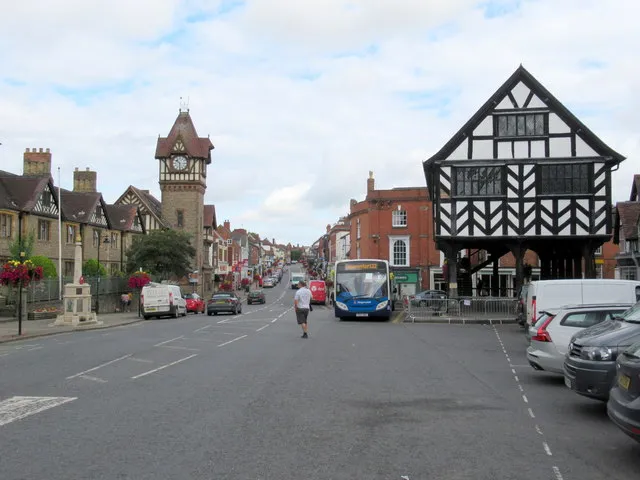
Photo: Roy Hughes , CC BY-SA 2.0, via Wikimedia Commons
Market squares are among the most photographed features of a British town, and among the least examined by buyers. A handsome square, a row of independent shops and a Saturday cluster of stalls can create an impression of vitality. That impression is not the same as a working market. For anyone considering a purchase in a market town in 2026, the difference is worth testing before solicitors are instructed, because it shows up in parking pressure, weekday footfall, commercial rents and, ultimately, in what buyers and tenants will pay for the surrounding streets.
Why a working market matters to a valuation
A functioning weekly market is an economic instrument. It draws people into the centre on a predictable day, supports neighbouring shops and cafés, and gives small producers and traders a lower-cost route to custom. It also generates the kind of repeated footfall that helps a high street remain viable between market days. A decorative market — one that exists mainly for visitors, operates sporadically, or is sustained by event programming rather than trade — can still look attractive, but it contributes far less to the commercial pulse of the town.
For a buyer, this is not a matter of local colour. It is a question of demand. Streets within a short walk of a genuine market often attract buyers who value convenience and a sense of place; they also tend to hold tenant interest because the centre remains active outside the weekend. A market that functions only as a backdrop may leave the surrounding roads dependent on car-borne visitors and seasonal trade, which is a weaker foundation for long-term value.
The stall audit: what to count and what to question
The first check is physical. Visit on a market day and count the occupied pitches rather than the painted lines. A working market usually has a stable core of regular traders, a reasonable mix of food, household goods and services, and a low proportion of empty pitches. It also has turnover: some stalls will change hands, but the market as a whole should not look as though it is being held together by a handful of stallholders.
Ask what is being sold. A market dominated by imported goods and resale merchandise may still be busy, but it is less embedded in the local economy than one with producers, growers and specialist traders. That matters because producer-led markets tend to have stronger links to the surrounding area, and those links can support demand for homes among people who work locally.
Look, too, at the infrastructure. Are there power supplies, waste arrangements, signage and a market office? A market that is actively managed tends to show these signs. A square that is simply filled with stalls on an occasional Saturday may not.
Weekday and Saturday patterns
A Saturday market can be deceptive. Many towns have a strong weekend offer that draws visitors from a wide radius, yet the centre can be quiet from Monday to Friday. That is not necessarily a weakness, but it is a different proposition from a town with a weekday market that serves local residents.
If possible, return on a non-market day. Compare footfall in the square, the number of open shops, and the level of activity in cafés and banks. A town with a functioning weekday market usually has a centre that works for residents as well as visitors. A town that depends almost entirely on Saturday trade may have a more fragile commercial ecology, and that fragility can affect the depth of buyer demand on the surrounding streets.
Parking, noise and the practical geography
Market-day maths also includes the unglamorous details. Parking pressure is a useful proxy for how far the market draws people. If the car parks nearest the square fill early and spill into residential streets, the market is attracting trade from beyond walking distance. That can be good for shops, but it can also create friction for residents.
Noise and delivery patterns matter as well. A working market generates early-morning arrivals, van movements and refuse collection. Buyers considering a property close to the square should visit at opening time and again at pack-down. The pattern will tell them more than a single afternoon viewing ever could.
Access is another check. Markets that work well usually have clear delivery routes and pedestrian priorities. If the square is cut off by traffic, or if stallholders are forced to unload across pavements, the market may be operating despite the town's layout rather than because of it.
The commercial pulse beyond the square
The streets immediately around a market are often the best evidence of its effect. Empty units are not automatically a warning sign, but a row of long-term vacancies on the approaches to a busy market deserves attention. So does the mix of businesses: a butcher, a baker, a hardware shop and a café suggest a centre serving daily needs. A run of charity shops and seasonal pop-ups may suggest a centre that is more decorative than functional.
Delivery routes are part of this picture. A market with local suppliers tends to generate regular commercial traffic: small vans, wholesale deliveries and traders moving stock. That activity is not always picturesque, but it is a sign of a market embedded in the local economy rather than staged for visitors.
What to do with the evidence
None of these checks produces a simple yes or no. They produce a picture. For buyers and investors, the practical step is to combine them with the usual due diligence: sold-price evidence, rental comparables, lease terms where applicable and the condition of the specific property.
A simple routine helps. Visit on a market day and a quiet day. Count stalls and note empty pitches. Speak to two or three traders about footfall and tenure. Check parking at 8am and 2pm. Walk the surrounding streets and note vacant units. Then compare what you have seen with asking prices and rental levels.
The market square is not a valuation in itself. But a working market is a signal of a town that still functions as a town, and that signal is worth reading before an offer is made.